
From 12th until 14th December 2025 enjoy exceptional year-end savings, special first-day deals, and thoughtfully curated festive gifts for every new HUAWEI device you bring home.

KUALA LUMPUR, 5 DECEMBER 2025 – HUAWEI Malaysia is closing 2025 on a warm and celebratory note with the launch of its seasonal Holiday Joy campaign. Designed to bring Malaysians together through festive moments and meaningful gifting, Huawei is celebrating the season of giving with exciting in-store surprises for customers. Shoppers can look forward to irresistible deals across Huawei’s popular line up of smart devices, including wearables, tablets, audio gear and lifestyle essentials, making this the perfect time to refresh their tech or discover something new.
The year has been an eventful one for HUAWEI fans, marked by the arrival of some of the brand’s most talked about innovations. Among the highlights is the photography focused HUAWEI Pura 80 Series, which redefined mobile imaging for everyday users, along with the stylish new HUAWEI WATCH GT 6 Series that brought fitness and wellness tracking to a new level. These were accompanied by the latest MatePad releases as well as expanded additions to Huawei’s audio and lifestyle ranges. Together, these launches have strengthened Huawei’s position among Malaysians seeking reliability, performance and beauty in the devices they use daily.
To celebrate the close of the year, Huawei is inviting Malaysians to enjoy an even more joyful shopping experience through a month-long line up of festive activities.
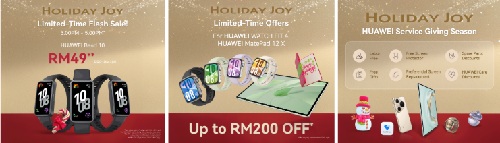
The festive spirit continues at selected HUAWEI Experience Stores across the Klang Valley, where visitors will be welcomed with a range of joyful in store treats. Customers can enjoy remarkable offers such as the latest HUAWEI Band 10 Series at an attractive price of only RM49, along with additional savings on selected wearables and tablets. Every visit is made even more enjoyable with complimentary festive gift wrapping, exclusive in store gifts, free smartphone servicing and attractive instant rebates for those wishing to trade in their existing devices. These celebrations can be experienced at key HUAWEI Experience Stores including The Exchange TRX, Pavilion Kuala Lumpur, Sunway Pyramid, Mid Valley City, Mid Valley Southkey in Johor Bahru and Gurney Plaza in Pulau Pinang.
Selected Wearable & Tablet Promotions
| PRODUCTS | RRP | SPECIAL PROMO PRICE |
| HUAWEI Band 10 | RM189 | RM49 |
| HUAWEI WATCH FIT 4 | RM599 | RM399 |
| HUAWEI MatePad 12 X | RM2,699 | RM1,799 |
HUAWEI EXPERIENCE STORE GRAND OPENING AT KUCHING, SARAWAK
The season also brings exciting news for East Malaysia, where Huawei will be opening two new Experience Stores at The Spring Mall at 11.00am and Vivacity Megamall Mall at 3.00pm in Kuching. Sarawak on 12 December 2025. In celebration of these openings, shoppers will be treated to grand-opening exclusive prices on some of HUAWEI’s most sought-after devices, including the HUAWEI Pura 80 Series, HUAWEI Mate X6, HUAWEI MatePad Pro 13.2, HUAWEI WATCH D2 and the HUAWEI WATCH GT 6 Series, with savings that can go up to RM3,198! These attractive offers will be available at both The Spring Mall and Vivacity Megamall stores, giving customers in Kuching the perfect opportunity to bring home their favourite Huawei products at remarkable value.
Opening Day Promotions (The Spring Mall & Vivacity Megamall)
| PRODUCTS | RRP | SPECIAL PROMO PRICE |
| Pura 80 | RM3,299 | RM2,299 |
| Pura 80 Pro | RM4,599 | RM3,099 |
| Pura 80 Ultra | RM6,599 | RM4,799 |
| Mate X6 | RM8,688 | RM5,499 |
| Matepad Pro 13.2 | RM3,699 | RM3,399 |
| Watch D2 | RM1,699 | RM1,499 |
| WATCH GT6 46mm Black | RM999 | RM699 |
| WATCH GT6 46mm Grey | RM1,099 | RM799 |
| WATCH GT6 46mm Green | RM1,099 | RM799 |
| WATCH GT6 Pro 46mm Black | RM1,299 | RM999 |
| WATCH GT6 Pro 46mm Brown | RM1,299 | RM999 |
| WATCH GT6 Pro 46mm Titanium | RM1,999 | RM1,699 |
| WATCH GT6 41mm Purple | RM999 | RM699 |
| WATCH GT6 41mm White | RM1099 | RM799 |
| WATCH GT6 41mm Brown | RM1099 | RM799 |
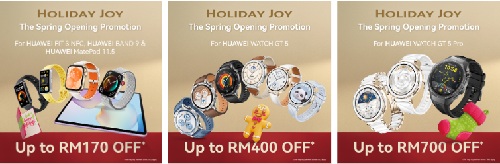
In addition to these shared promotions, the HES at The Spring Mall will also feature its own set of store-exclusive opening deals. Visitors to this outlet can look forward to special prices on selected devices such as the HUAWEI WATCH GT 5 Series, HUAWEI WATCH Fit 3 NFC, HUAWEI Band 9 and the HUAWEI MatePad 11.5, with discounts worth up to RM700. These limited-time offers add a festive touch to the grand opening, making it an even more exciting destination for shoppers this holiday season.
Opening Day Promotions (The Spring Mall Only)
| PRODUCTS | RRP | SPECIAL PROMO PRICE |
| WATCH GT 5 46mm Black | RM899 | RM499 |
| WATCH GT 5 41mm Blue | RM899 | RM499 |
| WATCH GT 5 46mm Blue | RM999 | RM599 |
| WATCH GT 5 41mm Brown | RM999 | RM599 |
| WATCH GT 5 46mm Brown | RM999 | RM599 |
| WATCH GT 5 41mm White | RM999 | RM599 |
| WATCH GT 5 Pro 46mm Black | RM1,199 | RM799 |
| WATCH GT 5 Pro 42mm White Ceramic | RM2,399 | RM1,699 |
| WATCH GT 5 Pro 42mm White Leather | RM1,799 | RM1,299 |
| HUAWEI WATCH FIT 3 NFC | RM499 | RM449 |
| HUAWEI BAND 9 | RM219 | RM49 |
| Matepad 11.5 | RM1,599 | RM1,499 |
Adding to the list of joyful moments, Huawei will also mark the 8th anniversary of the HUAWEI AppGallery on 22 December 2025. Malaysians can expect more celebratory announcements and promotions as the date approaches, extending the festive cheer throughout the month. Huawei also celebrated the opening of its new store at Suria Mall KLCC, reinforcing its commitment to expanding accessibility across key locations in Malaysia.
The Holiday Joy Sale aligns with HUAWEI Malaysia’s mission to bring cutting-edge technology closer to Malaysians while giving them more reasons to celebrate this festive season. Whether upgrading personal devices, gifting loved ones, or discovering new innovations, the Holiday Joy Sale offers something exciting for everyone, now made even more rewarding with the addition of the Holiday Lucky Draw.
Stay tuned for the Holiday Joy Sale and be among the first to enjoy exclusive year-end deals, festive free gifts, and a chance to win exciting prizes through the Holiday Lucky Draw. Visit any participating HUAWEI Experience Store near you or the HUAWEI Official Website to discover all promotions and rewards. This is the perfect time to upgrade your devices and celebrate the season with extraordinary savings.For the latest updates or promotions regarding the launch, please visit the HUAWEI Official Website, the HUAWEI Official Facebook page, or Instagram.


